All About Leviticus
The Book of Leviticus: the ugly, the bad—and the good.

The Book of Leviticus: the ugly, the bad—and the good.
Albert Einstein said that everything should be made as simple as possible—but no simpler. Jesus would have agreed.
The Apostle Paul had some advice about how to get a taste of the peace of God.
Hello, Merry Mystics!
Preparing for next week’s release of my new book, Star-Struck by the Stable Gate, I’ve been updating our Free Stuff page. Sheet music for all the hymns in the new book is available there now, and it’s easy to find at the top of the page. Also, there are video performances of all the music in the book. A few are solo performances, but most are videos that can be used to lead congregational singing, in case you don’t have an accompanist available. (I also added some videos for older hymns from The Inn of God’s Forgiveness.)
The new book will be available on the 19th. For now, check out the new free stuff here.
Some thoughts about posting the Ten Commandments in public school classrooms, as now legally required in four states.
The Apostle Paul wrote that Christ “emptied himself.” Emptied himself of what?
Hello, Merry Mystics!
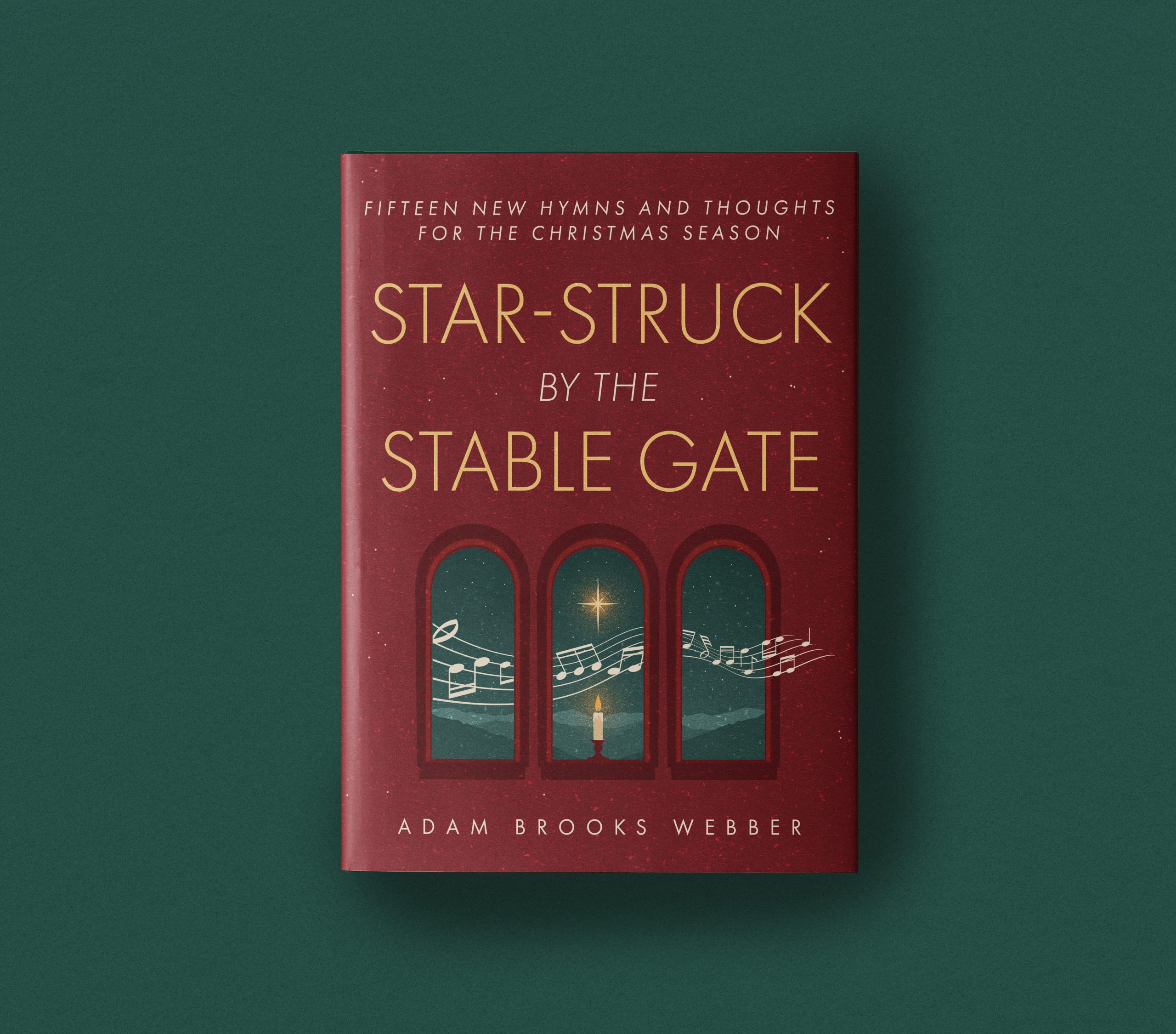
I have a new book on the way: Star-Struck by the Stable Gate: Fifteen New Hymns and Thoughts for the Christmas Season. It will be available on October 19th; the Kindle version is available for pre-order on Amazon now. By releasing it now, am I going after those big holiday bucks? Well, that’d be nice; but the truth is, the only books I’ve ever written that paid for the time I put into them were my computer science textbooks. I just wanted to get this new book out in time to be a bright Christmas blessing for someone.
The book is a collection of essays with original hymns and carols for Christmas. The format is similar to that of my 2014 book, The Inn of God’s Forgiveness, only with more music and less text. About half the hymns in the new collection make explicit references to the Bible stories of Advent, Christmas, or Epiphany; the other half, too, are connected to the Christmas season and to the birth of Jesus, in ways that I explain in the text.
The hymn texts, while distinctively Christian, are largely non-dogmatic, and I hope they’ll be useful across denominations. In these hymns, you will find no excerpts from the Nicene Creed (as in “O Come, All Ye Faithful”), no assertions about Jesus’ mother’s virginity (as in “Hark! The Herald Angels Sing”), and no conjectures about his atoning sacrifice (as in “Joy to the World”). I still love the old hymns too, and I sing them often; but I try to avoid weighing my own hymns down with that kind of dogmatic freight.
The hymns themselves are not new to you, my Merry Mystic subscribers; they’ve all been available on our website for a year or more. But I hope that the essays will be interesting. And I’ll be adding some things to our Free Stuff area, including video recordings of all the hymns in the book, to support congregational singing when an accompanist is not available. So stay tuned!
A.I. raises many ethical questions. So does church history.
We’re giving A.I. our languages and many of our mental abilities—along with our faults.
Midwives help hope to be born into the world. Often, that’s how God’s help begins.